Discover essential project management tips every project manager should know to improve planning, communication, risk management, and project success.
Table of Contents
Project Management Tips
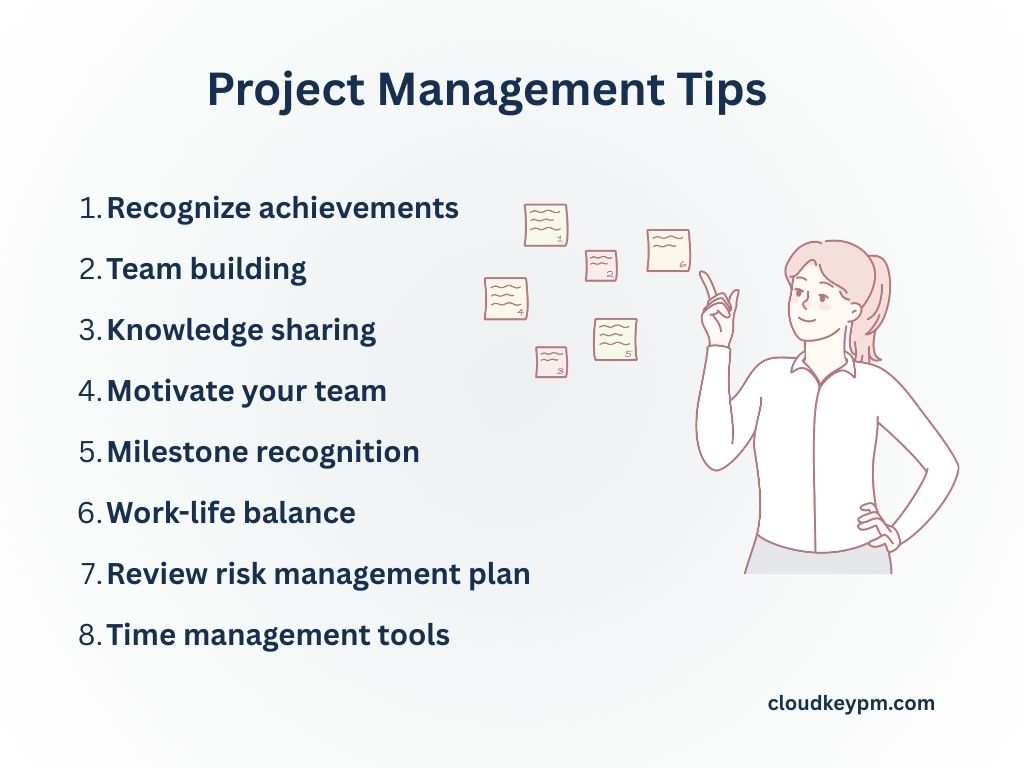
Read More: Project Management Tips Every Project Manager Should Know | Part 1
Recognize Achievements
Acknowledging and celebrating accomplishments is crucial for a successful project outcome. This practice significantly enhances team morale, cultivates a positive workplace atmosphere, and reinforces productive behaviors. When team members feel that their efforts and contributions are valued, their motivation, engagement, and dedication to the project’s objectives are likely to increase. Furthermore, making recognition public is a highly effective method for both attracting and retaining exceptional talent.
By celebrating milestones and successes, project managers create a culture of achievement where innovation and problem-solving thrive. Ultimately, recognizing achievements strengthens team cohesion, enhances performance, and increases the likelihood of project delivery within triple constraints.
Recognizing achievements and celebrating milestones is crucial for project managers, as it fosters a culture where problem-solving and innovation flourish. Ultimately, acknowledging successes strengthens team cohesion, boosts performance, and significantly increases the probability of delivering the project successfully within the scope, time, and budget constraints.
Team Building
Effective team building is a cornerstone of successful project management. It promotes vital collaboration and communication, which are particularly important for navigating complex projects. A key benefit is that project managers, by understanding individual team members’ strengths, weaknesses, and preferred work styles, can optimize task delegation and quickly and efficiently resolve conflicts.
Building strong teams is crucial as it fosters innovation, enhances adaptability to change, and improves the ability to overcome challenges collaboratively. Consequently, this results in higher productivity, better team morale, and increased project success rates. Moreover, effective team building establishes a supportive workplace where individuals feel valued and dedicated to achieving the project’s objectives.
Knowledge Sharing
Effective knowledge sharing is essential for successful projects. Teams can avoid duplication of effort and speed up problem-solving. Sharing lessons learned from past projects not only reduces errors but also enhances the quality of decision-making.
Cultivating a knowledge-sharing culture significantly boosts collaboration by increasing team members’ awareness of one another’s skills and input. This ultimately leads to better project efficiency, higher quality, and improved overall performance through the optimal utilization of existing knowledge and resources.
Motivate Your Team

Team motivation is paramount to project success. Highly motivated teams exhibit greater engagement, productivity, and commitment to project goals. This strong motivation fuels creativity, enhances problem-solving abilities, and fosters a readiness to exceed expectations. Ultimately, a motivated team is better equipped to navigate challenges, adapt to changes, and sustain a positive outlook throughout the project lifecycle.
Project managers can cultivate a supportive environment, promoting growth and development, by grasping the unique needs and motivations of each team member. This focus on motivation is key because a highly motivated team consistently delivers superior work, meets deadlines efficiently, and significantly contributes to the overall success of the organization.
Milestone Recognition
Recognizing milestones is vital in project management. It provides tangible evidence of progress,which is key to sustaining the confidence and support of stakeholders.
Recognizing project milestones is crucial for success. This practice allows project managers to reinforce the value of teamwork and their dedication to the project’s outcome, which, in turn, significantly boosts team morale, motivation, and a collective sense of accomplishment. Furthermore, milestone recognition serves as a vital feedback mechanism, highlighting both strengths and weaknesses, enabling timely adjustments and continuous improvement.
Ultimately, by keeping the team focused, motivated, and aligned with project objectives, celebrating milestones directly contributes to overall project success.
Work-Life Balance
Effective project management hinges on a healthy work-life balance. When team members prioritize their personal well-being, they consequently become more focused, productive, and resilient. High-pressure project environments often lead to burnout and stress, which are detrimental to creativity and performance. Conversely, a team that maintains balance is better prepared to address challenges, make informed decisions, and sustain a positive outlook.
Project managers foster a sustainable work environment where team members feel valued and supported by prioritizing work-life balance. This focus on the team’s overall health and well-being ultimately contributes to better project outcomes.
Read More: How to Manage Stress as a Project Manager
Review Risk Management Plan

Consistent and regular review of a risk management plan is critical for achieving project success. Given the dynamic nature of the project environment, which involves new risks constantly emerging and existing ones evolving, continuous examination of the plan is necessary. This practice allows project managers to proactively identify potential threats, accurately assess their potential impact, and effectively implement timely countermeasures.
This proactive approach helps project managers to minimise surprises, protect project objectives, and allocate resources efficiently. Additionally, reviewing the plan ensures that risk responses remain relevant and effective. This process also creates a valuable chance to share risk details with stakeholders, thereby building greater confidence and ensuring openness.
Time Management Tools
Effective time management tools are essential for successful project management. They offer a framework for organizing and visualizing project schedules, tasks, and resource allocation. Through proficient time management, project managers can streamline timelines, proactively identify bottlenecks, make necessary adjustments, and mitigate potential risks.
Tools such as digital calendars, time tracking, note-taking, and Pomodoro apps enhance team collaboration by providing real-time access to project plans and updates. Furthermore, they allow for precise progress monitoring, which supports timely adjustments and effective risk mitigation.
Effective time management tools are essential for successful projects, as they help ensure that deadlines are consistently met, resources are used efficiently, and communication with stakeholders remains transparent and timely.
Conclusion
Project management tips such as recognizing achievements, team building, knowledge sharing, motivating your team, milestone recognition, work-life balance, review risk management plan, and time management tools are essential for every project manager because they are crucial to project success.