Learn essential project management tips every project manager should know to plan better, manage risks, and deliver successful projects.
Table of Contents
Project Management Tips
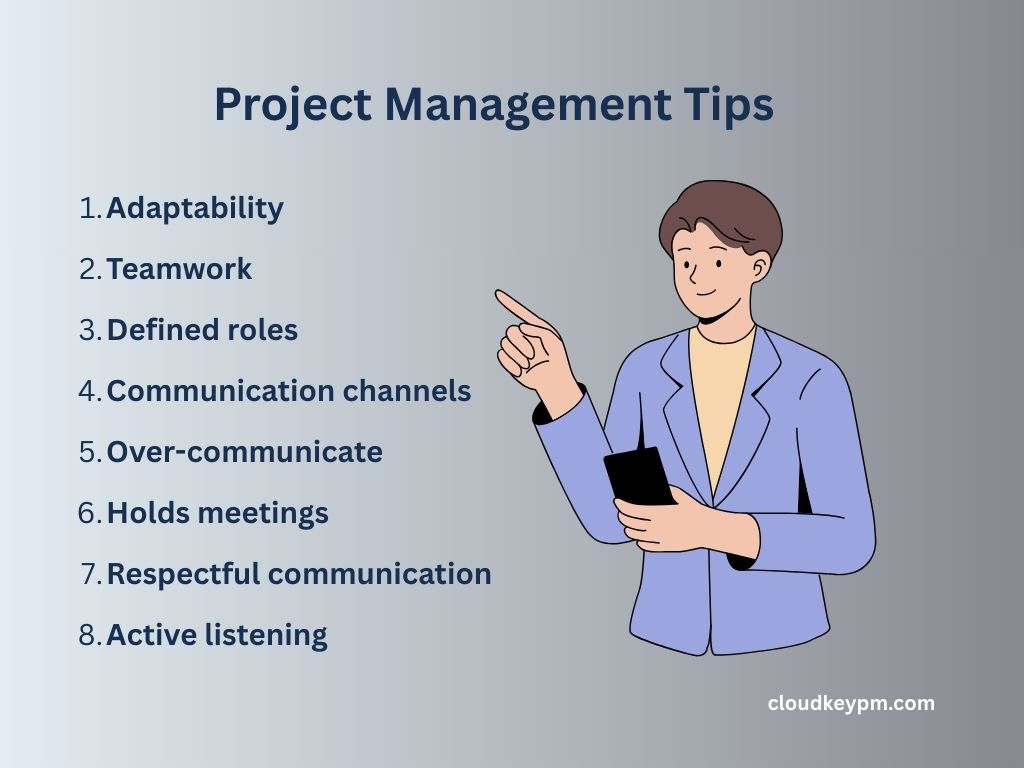
Delivering successful projects consistently is not a matter of chance; it’s the result of strong leadership, proven techniques, and effective project management practices. Regardless of whether you are a beginner or an experienced professional, utilizing the right project management tips is key to delivering high-quality projects on time and within budget.
Let’s discuss the most important project management tips every project manager should know to increase project success and stakeholder satisfaction.
Let’s explore the essential project management tips every project manager needs to master for boosting project success and improving stakeholder satisfaction.
Adaptability
Successful project managers must be adaptable. This is because projects are naturally dynamic, characterized by shifting requirements, unexpected challenges, and continuously evolving circumstances. Project managers who quickly and effectively adapt to these changes are better positioned to overcome challenges and achieve successful results.
Being adaptable in a project means maintaining flexibility, an open mind, and a readiness to modify plans as necessary. This also entails strong critical thinking, effective problem-solving skills, and the capacity to make sound decisions even when under pressure.
Adaptable project managers are crucial for success because they embrace change and develop creative solutions. This ability is vital for maintaining project momentum, mitigating risks, and ultimately exceeding stakeholder expectations. Furthermore, adaptability instills resilience and motivation within the project team, prompting members to think creatively and collaboratively overcome obstacles. In essence, adaptability is not just beneficial, but essential for successfully navigating the complexities inherent in project management.
Teamwork
Successful project management is fundamentally built upon strong teamwork. This collaboration is crucial as it encourages open communication and a sense of shared ownership, creating a synergy that is vital for driving a project to completion.
When a team works together cohesively, the collective effort—leveraging individual strengths, combining diverse skill sets, and sharing knowledge—naturally increases efficiency, enhances problem-solving abilities, and results in higher-quality deliverables. Furthermore, this positive dynamic fosters mutual trust and respect, leading to a supportive and constructive work environment.
Enhanced team morale, resulting from feeling valued and empowered, directly increases engagement and motivation, which drives project success. Furthermore, effective teamwork improves communication and information sharing. This minimizes miscommunication and ensures all members are unified in achieving project objectives.
A project manager’s ability to achieve project objectives, overcome challenges, and generate a lasting positive impact is dependent on fostering a strong team culture.
Defined Roles
Clearly defined roles are vital for successful project execution. When team members understand their specific responsibilities, it boosts accountability, efficiency, and collaboration. Conversely, a lack of role clarity can lead to confusion, duplication of effort, and conflict, ultimately impeding project progress.
Clearly defined roles are essential for team productivity and project efficiency. When roles are distinct, team members can leverage their specific expertise and focus on their assigned tasks. This clarity also aids the project manager in effective resource allocation, allowing tasks to be assigned based on individual strengths. Furthermore, clear roles enhance communication, as they establish a straightforward contact point for specific information or assistance.
A well-defined structure of roles and responsibilities enables project managers to enhance organization and efficiency, leading to more successful project outcomes.
Communication Channels

For project success, establishing effective communication channels is crucial. They serve as the essential infrastructure for information sharing, coordinating efforts, and fostering strong relationships among all project stakeholders. Clear and appropriate utilization of these channels ensures that every individual remains informed, actively engaged, and fully aligned with the overarching project goals.
Project managers boost efficiency and prevent information overload by judiciously choosing communication channels. Formal communications are best suited for platforms like email, whereas instant messaging can be utilized for swift updates. Furthermore, scheduled project meetings and status reports facilitate essential face-to-face engagement and collective knowledge exchange.
By establishing open and transparent communication channels, project managers can foster collaboration, build trust, and minimize misunderstandings, ultimately contributing to project success.
Project success is significantly enhanced when project managers establish open and transparent communication. This practice is crucial for fostering collaboration, building trust, and minimizing misunderstandings among team members.
Over-communicate
Effective project management is fundamentally reliant on overcommunication. This means consistently sharing more information than might be strictly essential, which is key to ensuring that every stakeholder is not just aware, but fully involved and working toward the same goals. This proactive style of communication is vital because it dramatically reduces the potential for mistakes, prevents misinterpretations, and cultivates an environment built on clarity and trust.
Consistent and thorough communication, often referred to as “overcommunication,” is crucial for team success. By keeping team members fully informed and feeling valued, this approach fosters trust. Furthermore, it acts as a proactive measure, allowing concerns to be addressed and resolved before they escalate into major problems. Although it requires an initial time investment, the advantages are significant: it aligns everyone’s understanding, boosting efficiency, improving the quality of deliverables, and ultimately ensuring project success.
Holds Fewer Meetings
Optimizing project performance and efficiency is achievable by reducing the number of meetings. Too many meetings can severely impact productivity by consuming valuable time, breaking up the workflow, and making it harder for team members to focus. Therefore, project managers should carefully assess the need and objective of every meeting to streamline schedules and boost overall project output.
By utilizing effective communication channels, such as email, instant messaging, and dedicated project management software, organizations can often reduce the necessity for in-person meetings. Furthermore, establishing a clear agenda and strict time limits for any meetings that do occur is essential to keep discussions focused and ensure productivity.
Project teams can enhance overall project outcomes and boost output by decreasing the number of unnecessary meetings, allowing them to focus more time on essential project activities.
Respectful Communication

Effective communication is vital for successful project management. It requires transparent, candid, and consistent dialogue among all project stakeholders, which in turn builds trust and promotes teamwork. By valuing and considering different viewpoints, project teams are better equipped to align on objectives, make sound decisions, maintain steady communication with updates, and promptly resolve issues.
respective communication is crucial for project success. It prevents misunderstandings, minimizes errors, and aligns everyone toward common objectives. Furthermore, respective communication strengthens team morale, increases productivity, and helps proactively manage expectations, provide regular updates, and promptly address any challenges that arise.
Project managers can foster a positive project culture and strong relationships by actively listening to and valuing the input of team members and stakeholders.
Active Listening
Effective project management hinges on active listening. This practice is more than just processing sounds; it demands complete engagement with the speaker, deeply grasping their viewpoint, and formulating considerate responses. Within a project environment, this commitment directly leads to establishing trust, enhancing teamwork, and ensuring well-founded decision-making.
Active listening is crucial for project managers, enabling them to discover underlying issues, leverage creative solutions, and resolve anxieties before they grow. Furthermore, by incorporating diverse perspectives, active listening significantly strengthens the problem-solving process.
Active listening is crucial for project success because it fosters strong stakeholder relationships. When stakeholders feel heard and understood, they are more inclined to support project goals. This essential skill aids in conflict resolution, builds a positive project culture, and ultimately serves as an investment that leads to improved decision-making, higher team morale, and better quality deliverables.
Conclusion
Project management tips such as adaptability, teamwork, defined roles, communication channels, over-communicating, holding meetings, respectful communication, and active listening are essential for every project manager because they are crucial to project success.