


Learn why project closure matters, explore the key steps involved, and discover how to close a project successfully, capture lessons learned, and ensure a smooth final handover.
Table of Contents
What Is Project Closure?
Project closure is one of the most important phases of project management, but it is often overlooked. While project teams mostly focus on planning, execution, deadlines, and deliverables, formally closing a project is equally important.
Project closure is the process of completing all remaining project activities, ensuring that all agreed-upon project management processes are executed, confirming that deliverables have been accepted, closing contracts and documentation, releasing resources, and capturing lessons learned. Well-managed closure ensures the project ends in an organized, controlled manner. Important: When reviewing the project, the project manager must double- and triple-check that all work is complete to avoid revisiting the project later.
Pro Tip: According to the PMBOK, project closure is the final phase of the project life cycle.
Why Is Project Closure Important?
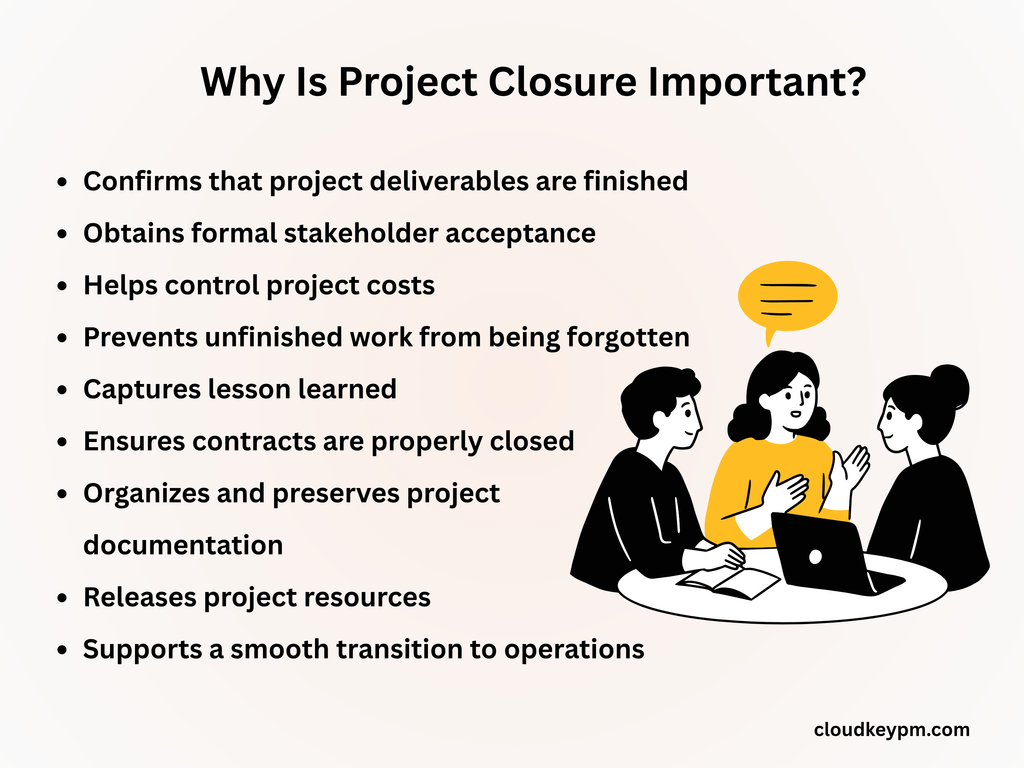
Project closure is an important process in every project because it allows project managers to confirm the following aspects.
- Confirms that project deliverables are finished
A formal project closure offers an opportunity to confirm that the agreed deliverables have been completed. The project manager can compare the final results against the original requirements, scope, schedule, budget, and quality expectations. Without a proper closure process, incomplete work can easily go unnoticed.
- Obtains formal stakeholder acceptance
The most important activity during project closure is getting formal acceptance of the project’s deliverables. Stakeholders should confirm that the completed work meets the agreed requirements. Formal approval provides evidence that the project has reached an acceptable conclusion and can also help prevent future disagreements about whether the project was actually completed.
- Helps control project costs
Project closure allows the project team to review the financial position. This helps project managers determine actual project expenditure, remaining budget, outstanding invoices, unpaid commitments, procurement costs, and variances between planned and actual costs. Properly closing financial activities helps ensure project accounts remain accurate.
- Prevents unfinished work from being forgotten
Projects often have a few small tasks left at the end. These may include documentation, training, testing, approvals, and contract administration. A closure checklist helps the project manager identify and complete these activities before officially closing the project.
- Captures lesson learned
One of the greatest benefits of project closure is the opportunity to learn from the project. Using this, the project team can review,
- What went well?
- What problems occurred?
- Which processes worked effectively?
- What could have been done differently?
- Were the original estimates accurate?
- Were communication methods effective?
- How were risks managed?
- What should future project teams avoid?
- Ensures contracts are properly closed
Many projects involve external stakeholders such as suppliers, contractors, vendors, consultants, and other outside organizations. During the project closure phase, the project team should confirm that contractual obligations have been completed. This may include verifying deliverables, resolving outstanding issues, processing final payments, and formally closing contracts.
- Organizes and preserves project documentation
Many projects generate various documents, such as project plans, requirements, schedules, budgets, risk registers, issue logs, change requests, meeting records, contracts, reports, acceptance documents, and more. During this phase, important records should be reviewed, organized, and stored properly.
- Releases project resources
Once the project is finished, employees, equipment, facilities, and other resources may no longer be needed. Project closure offers a structured way to release these resources and assign team members to new projects or operational responsibilities.
- Supports a smooth transition to operations
Some projects create products, systems, services, or processes that must be handed over to an operational team. The project closure phase helps ensure the receiving team has everything it needs, including user documentation, training, maintenance information, support procedures, system access, and operational responsibilities. A proper handover minimizes disruption after the project team leaves.
Key Activities in Project Closure
Here are the essential key activities that should be completed during the project closure phase.
- Confirming deliverables are complete
- Obtaining final stakeholder approval
- Closing contract
- Finalizing project finances
- Archiving project documents
- Releasing resources
- Recording lessons learned
- Preparing the final project report
The Closing Process for Project Managers

The project closing phase is a chance to reflect on how you and your team performed, make sure every task is completed, and avoid future confusion. One of the most important aspects of thoroughly closing a project is the project closeout report. A closeout report is a document created by project managers for project managers.
As below, A project closeout report serves three major purposes.
- Serves as a blueprint for documenting what the project team did, how they did it, and what they delivered
- Serves as an evaluation of the quality of project work
- Serves as an evaluation of the project’s performance with respect to budget and schedule.
The project closeout report can help determine best practices for future projects. As a project manager, creating a detailed closeout report can help the newly assigned project manager understand what happened on a similar past project. Therefore, your closeout report could include what worked well and what did not.
Creating a closeout report will also reduce the time you spend answering questions as the new project manager gets up to speed. It’s safe to assume that future readers of your report will be unfamiliar with the project, so be as detailed as possible. That way, the new project team will understand the project’s purpose, expectations, and outcome from your report alone.
Here are the main key areas to include when creating a project closeout report.
- Project executive summary – this means a description of the process and what the purpose of the project was.
- A list of key accomplishments – Highlight the team’s accomplishments and the project’s overall impact, including lessons learned about what went well and what went wrong, and why.
- Key problem areas – includes scope creep, schedule slips, or any open items.
- Schedule and important deadlines – This may include your milestones, how you chose them, how long the project took, whether it stayed on track, and any major setbacks. List the project resources and team members, and explain who was involved and what their roles were.
- Resources and project archive section – This may include items such as your original project plan, any documented stakeholder communication and feedback, meeting notes, documentation used to track, monitor, and report progress, and any technical information related to the project deliverables.
Best Practices for Effective Project Closure
Project managers can enhance the project closure process by following these practices.
- Start planning for closure early
- Use a project closure checklist
- Involve stakeholders for the final review and acceptance process
- Document lessons learned
- Complete the handover properly
- Obtain formal sign-off
Conclusion
Project closure is a vital part of successful project management. It confirms that deliverables are completed, stakeholders have accepted the results, financial and contractual activities are finished, resources have been released, and project knowledge has been captured.
FAQs
Who is responsible for project closure?
The project manager typically coordinates the project closure process, with support from the project team, sponsor, and stakeholders.
What is the project closure checklist?
A project closure checklist is a list of activities that need to be completed before a project is formally closed. It helps the project manager make sure important tasks, approvals, documentation, and financial activities are not overlooked.
What are lessons learned in project closure?
Lessons learned are key takeaways from the project about what worked well, what problems arose, and what could be improved. They can also help organizations manage future projects more effectively.
What is project sign-off?
Project sign-off is the formal confirmation from the appropriate customer, sponsor, or stakeholder that the project’s deliverables have been completed and accepted.


