Last updated on November 12th, 2026 at 12:16 pm

Discover 4 strategic analysis frameworks for project management: VIRO analysis, PESTLE analysis, SWOT analysis, and Porter’s Five Forces.
Table of Contents
A project can have sufficient resources, a detailed schedule, and a skilled team but still fail to deliver the expected outcomes. Why? Because project management isn’t just about completing tasks on time and within budget. It also requires a clear understanding of the project environment, evaluating available resources, identifying potential challenges, and making decisions that support project goals. This is where strategic analysis frameworks become helpful.
Strategic analysis frameworks such as VIRO analysis, PESTLE analysis, SWOT analysis, and Porter’s Five Forces help the project manager evaluate internal capabilities, understand external conditions, identify opportunities and threats, and assess competitive pressure before making important decisions. They also provide structured ways to examine a project from different perspectives rather than relying only on assumptions and personal judgement.
In this article, you’ll learn what these four strategic analysis frameworks are, how their elements work, how to apply them in project management, and how to select the right framework for your project.
What Are Strategic Analysis Frameworks in Project Management?
Strategic analysis frameworks are structured tools that help project managers evaluate internal resources, external project environment, competitive position, and potential opportunities or challenges. For example, imagine your company is planning to develop a new project management software. Before starting development, you need to consider the following questions.
- Do we have the technical skills and resources required?
- Are there legal or technological changes that could affect development?
- What are the software’s strengths and weaknesses?
- How competitive is the project management software market?
- Does the proposed project support the company’s long-term objectives?
Strategic analysis frameworks provide critical methods for exploring these questions. However, these frameworks are not complete project management methodologies. They also do not replace project schedules, budgets, risk registers, or project management plans. Instead, they support strategic thinking and help project managers make better-informed decisions.
Why Are Strategic Analysis Frameworks Important?
Starting a project without understanding its strategic environment may lead to wasted resources, unexpected risks, and outcomes that don’t support project objectives. Strategic analysis frameworks help project managers:
- Improve project decision-making
- Identify opportunities and threats
- Evaluate organizational capabilities
- Support risk identification
- Connect the project with business objectives
4 Strategic Analysis Frameworks for Project Management
The following four strategic analysis frameworks help project managers explore different aspects of a project.
- VIRO analysis
- PESTLE analysis
- SWOT analysis
- Porter’s Five Forces
Read more: Download Strategic Analysis Framework Templates (Excel)
So, let’s learn each one, including its elements and practical applications.
VRIO Analysis
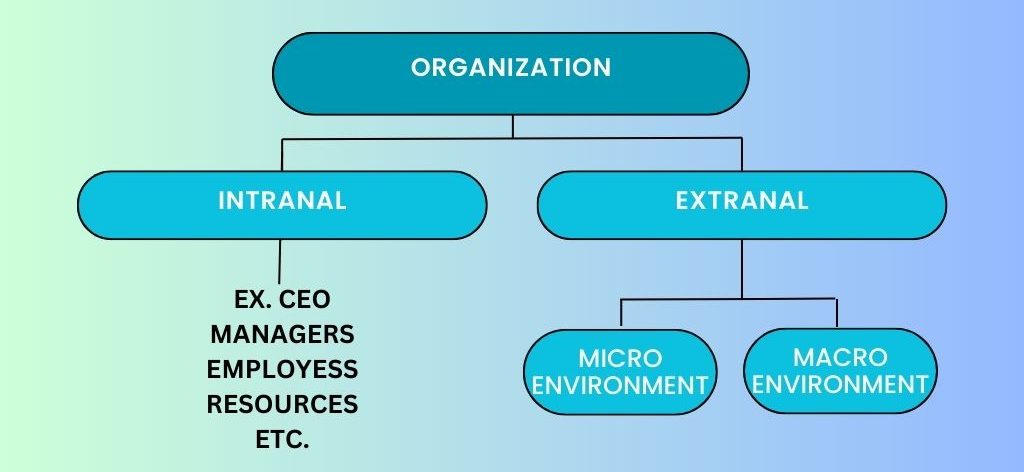
VRIO analysis can use to assess the competency of an organization’s internal resources, including physical and human resources.
Four Elements of VRIO
- V – Value
- R – Rareness
- I – Inimitability
- O – Organization
Value
The organization can enhance its value through its resources which are human resources, technological resources, and financial resources. A organization’s value helps to maximize opportunities and minimize threats.
Human resources help to increase productivity and adaptability. When decreasing productivity, the value of the organization gradually decreases. Adaptability is also important because, in crucial situations, you need to be able to make the decisions and adapt them. For example, in a coronavirus situation, most of the organizations took the decisions and adapted them. By increasing the value of the organization can maximize opportunities and minimize threats.
If a organization has the latest updates in technological resources, that will help to maximize opportunities and reduce threats. As well as financial resources are also crucial to maximize the benefits and mitigate threats. To ensure this, the project manager can ask:
- Does it help solve an important customer problem?
- Does this resource help us achieve project objectives?
- Can it reduce project delivery time or costs?
- Does it improve product or service quality?
Rareness
How many competitors already have these valuable strategic capabilities?
If anything (resources) used by many organizations, it will not create advantages. When a organization has resources which others do not have, such organizations can maximize opportunities and minimize threats. If a organization’s resources are rare, the value of the resources will increase. For example, Oil-producing countries. To ensure this, the project manager can ask:
- Can this resource provide an advantage over alternative project approaches?
- Is this skill difficult to find in the market?
- Do we have technology that competitors do not have?
- Does the team possess specialized experience?
Inimitability
When it is difficult or costly to imitate the organization’s resources for others, that will increase the organization’s value. So, inimitability examines how difficult or expensive it would be for competitors to copy or develop a particular resource. To ensure this, the project manager can ask:
- Can competitors easily reproduce this capability?
- Would developing a similar resource require significant investment?
- Does the resource depend on unique experience or knowledge?
- Would copying it take considerable time?
The following are the reasons for inability of the imitating.
- Path dependent ( history of firm’s resources for others. Ex. German automobile industry)
- Causally ( way of creating is not fully known. ex. Coca-Cola)
- Socially complex ( can not change in a short time. Ex. Organization culture)
Organization
Is a organization having an organized management system, policies, and process structures to exploit the full competitive potential of strategic capabilities?
So according to the above question, your organization should have a well-established management system, procedures, and policies to maximize opportunities and mitigate threats. To ensure this, the project manager can ask:
- Can the team use its capabilities effectively?
- Are responsibilities clearly assigned?
- Does the organization have suitable processes?
- Are resources properly allocated?
- Does management support the project?
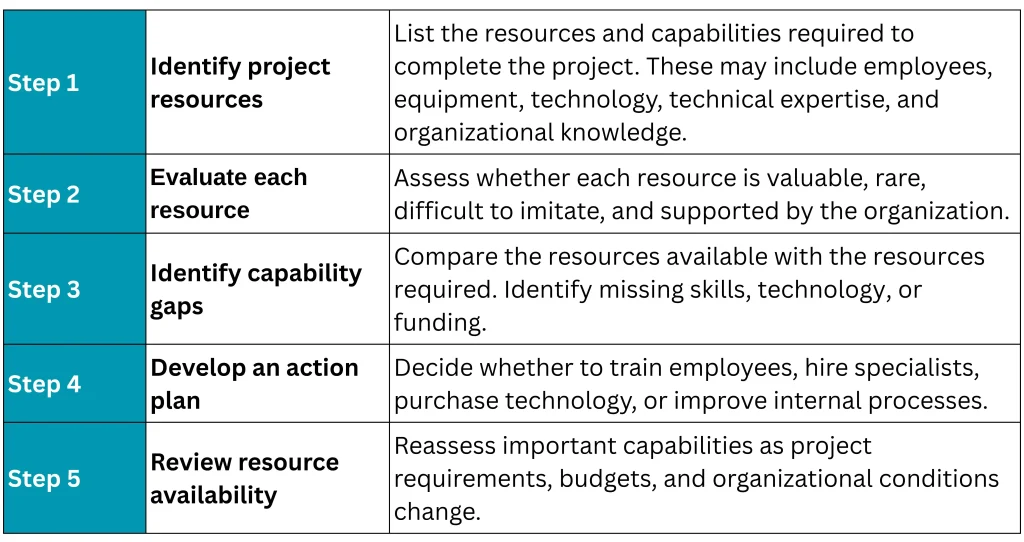
How to Apply VRIO in Project Management
The project manager can use VRIO analysis during project selection, feasibility assessment, and strategic planning. Follow these steps:
PESTLE Framework
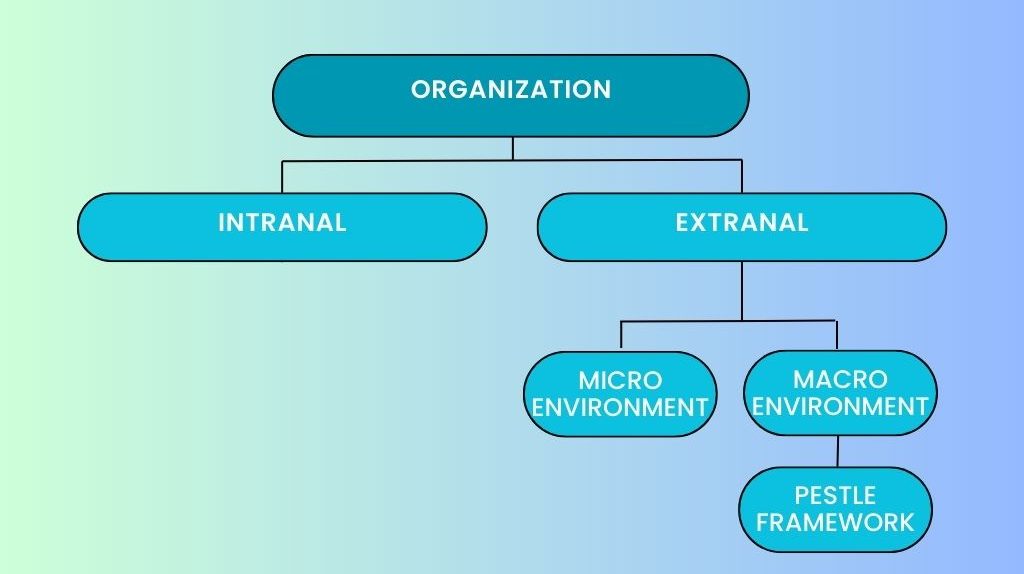
PESTLE Framework can use to identify the macro environment variables that could affect the project. That includes the political environment, economic environment, social and cultural environment, technological environment, legal environment, and environment.
Six Elements of PESTLE
The political environment includes political stability, trade, and business policies. Project managers should consider:
- Could government policy changes affect the project?
- Are there political risks in the project location?
- Could changes in public spending affect project funding?
- Are government approvals or permits required?
The economic environment includes the inflation rate, gross domestic product (GDP), and income distribution. Project managers should consider:
- Could government policy changes affect the project?
- Are there political risks in the project location?
- Could changes in public spending affect project funding?
- Are government approvals or permits required?
The social and cultural environment includes a variety of social and cultural environments, values, and consumption habits. Project managers should consider:
- Does the project meet customer or community needs?
- Are there changes in customer preferences?
- Could cultural differences affect stakeholder communication?
- Does the project affect local communities?
The technological environment includes product innovations, increasing research and development expenditures, and new communication technology. Project managers should consider:
- Is the required technology available?
- Could new technology make the proposed solution outdated?
- Does the team have the technical skills needed?
The legal environment includes increasing business legislation, consumer protection laws, and trade laws. Project managers should consider:
- Does the project comply with relevant regulations?
- Are there data security obligations?
- Could changes in employment law affect staffing?
- Are permits or licenses required?
The environment includes climate crisis, pollution, and more focus on environment conservation. Project managers should consider:
- Could extreme weather affect project activities?
- Are there environmental approval requirements?
- Can the project reduce energy or resource consumption?
In project management, PESTLE analysis helps project managers identify external changes that could affect project costs, schedules, resources, requirements, and outcomes.
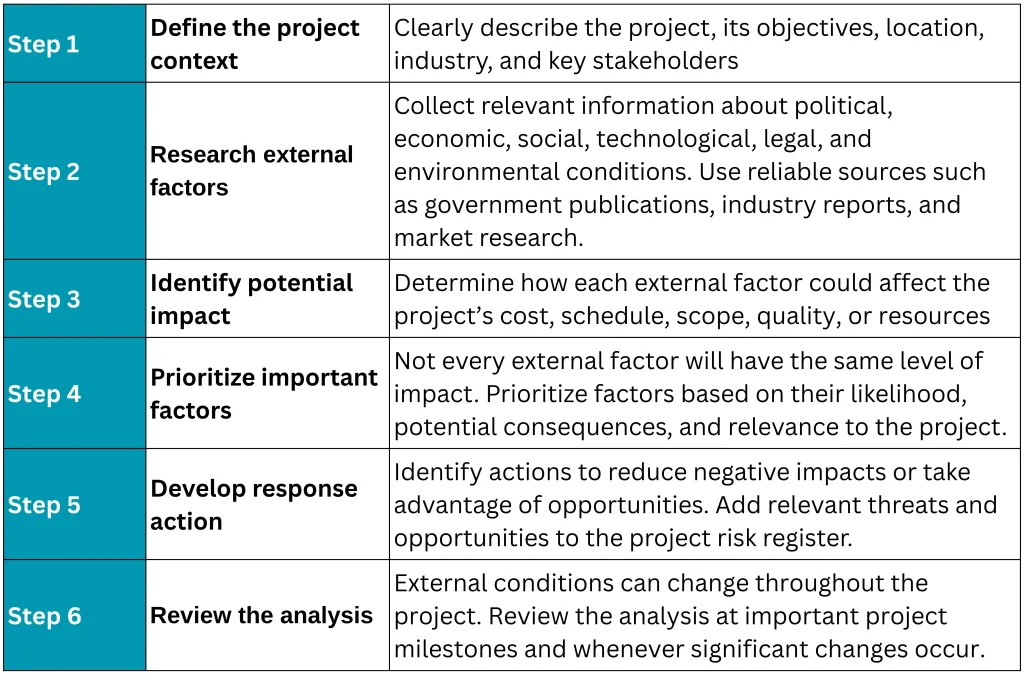
How to Apply PESTLE in Project Management
The project manager can use PESTLE analysis during project initiation, feasibility studies, strategic planning, and risk identification. Follow these steps:
SWOT Analysis
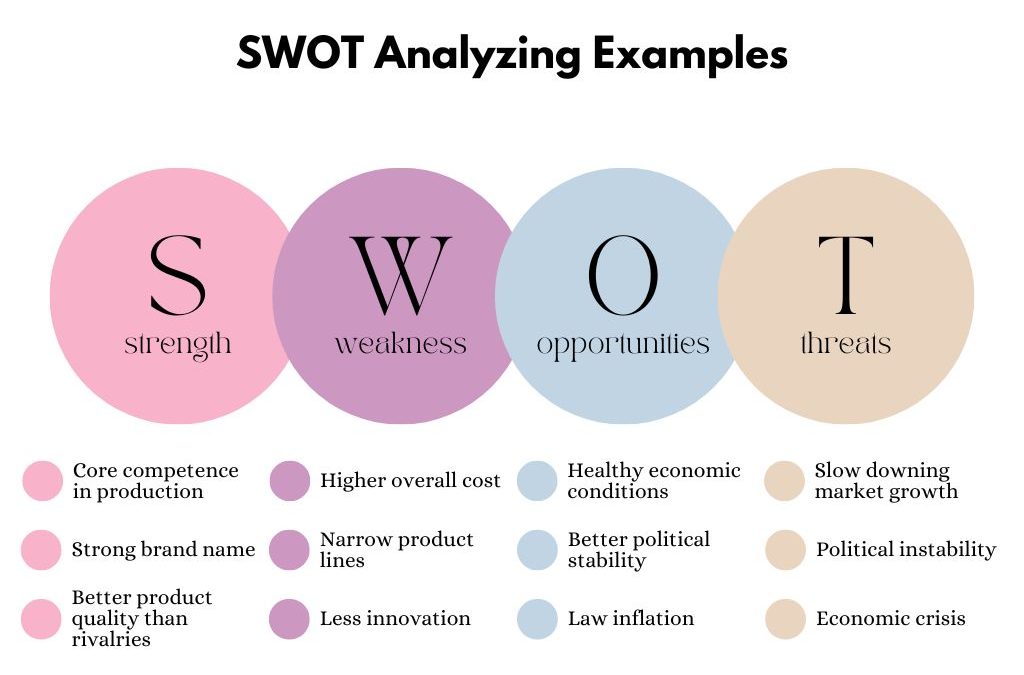
The third project strategic management framework is the SWOT analysis. A strategic tool can use for analyzing and scanning the project environment. That will help to make the best decision or establish a business strategy.
Four Elements of SWOT
- S – Strengths
- W – Weaknesses
- O – Opportunities
- T – Threats
Strengths and weaknesses analysis focused on the internal environment. Opportunities and threats analysis focused on the external environment.
- A strength is a resource, asset, or capacity the organization can use effectively and efficiently to achieve its objectives and goals.
- A weakness is a limitation, fault, or bug in the organization that will keep it from achieving its objectives and goals.
- An opportunity is any advantageous situation in the organization’s environment. That will help to enhance the organization’s position by supplying it.
- A threat is any unfavorable or unexpected situation in the organization’s environment. That is probably damaging to its strategy. On the other hand, a threat may be an obstacle, barrier, or anything external that might cause problems or damage.
SWOT Matrix
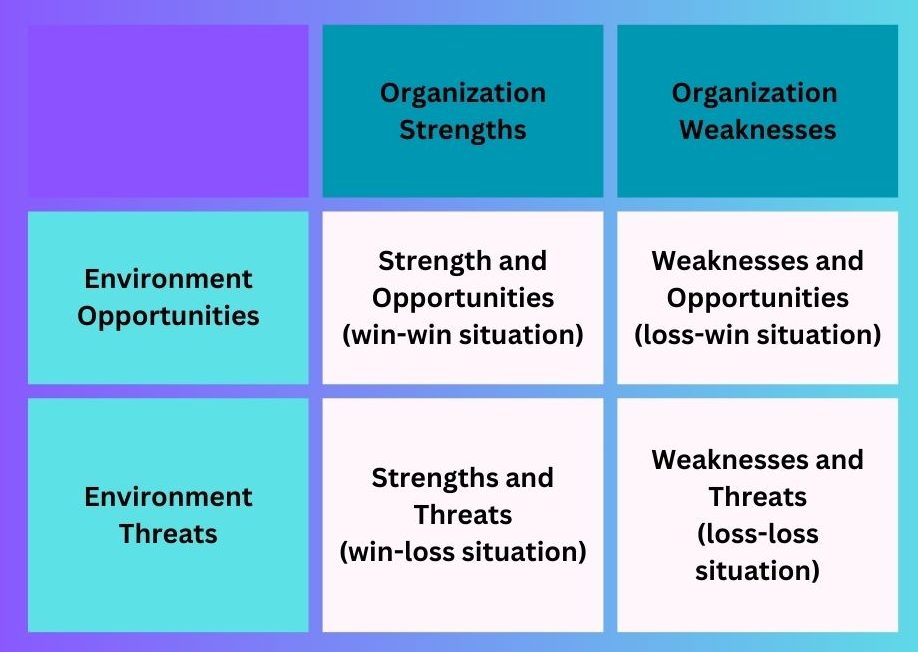
SWOT Matrix is a framework for a systematic analysis of matching external opportunities and threats with internal weaknesses and strengths.
How to Apply SWOT in Project Management
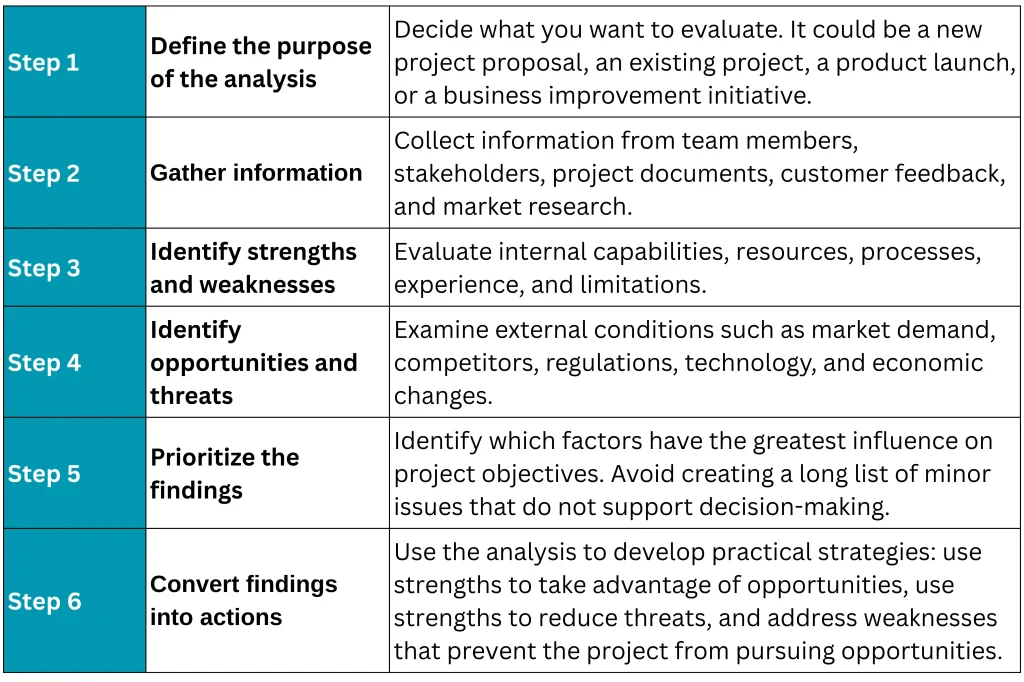
The project manager can use SWOT analysis to assess project feasibility, support planning, and identify strategic priorities. Follow these steps:
Industry Analysis – Michael Porter’s Five Force Model
The fourth project strategic management framework is the Industry analysis. Industry analysis can use to identify the micro environment variables that could affect the project.
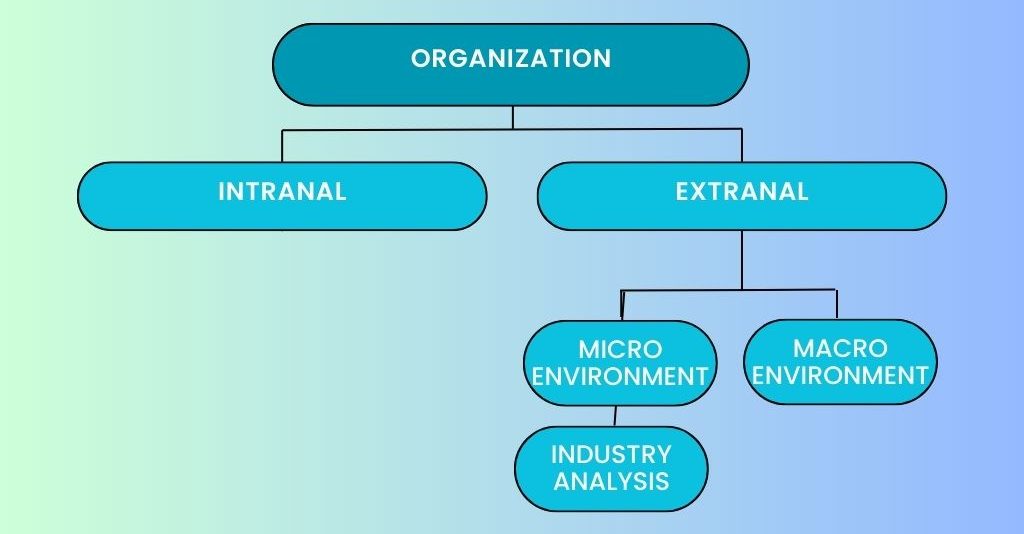
According to the industry analysis, Michael Porter’s five force model is as follows,

Rivalry among existing competitors
- The rivalry is strong when competitors are high or equal in size and power.
- Exit barriers are high.
- Rivals are highly committed to the business.
The threat of new entrants
- If threats of new entry are high, reduce profitability/attractiveness.
- Threats of entry into an industry depend on the nature of entry barriers.
- When entry barriers are lower, the threat of new entrants is high.
The following are the sources of entry barriers.
- Legal barriers
- Unequal access of resources
- Capital requirement
- The threat of substitutes
A substitute performs a similar function as an industry’s product by a different means.
The following are the reasons for the threat of a substitute is high
- If they are good or close substitutes
- If it gives a similar satisfaction
- If the cost of using a substitute is very low
The power of suppliers
Suppliers group is powerful if,
- The number of suppliers is less
- The supplier group does not depend on the industry for its revenues
The power of buyers
Buyers are powerful if,
- There are few buyers
- Buyers get more benefits from other firms/substitutes
Strategic Implications of the five competitive forces
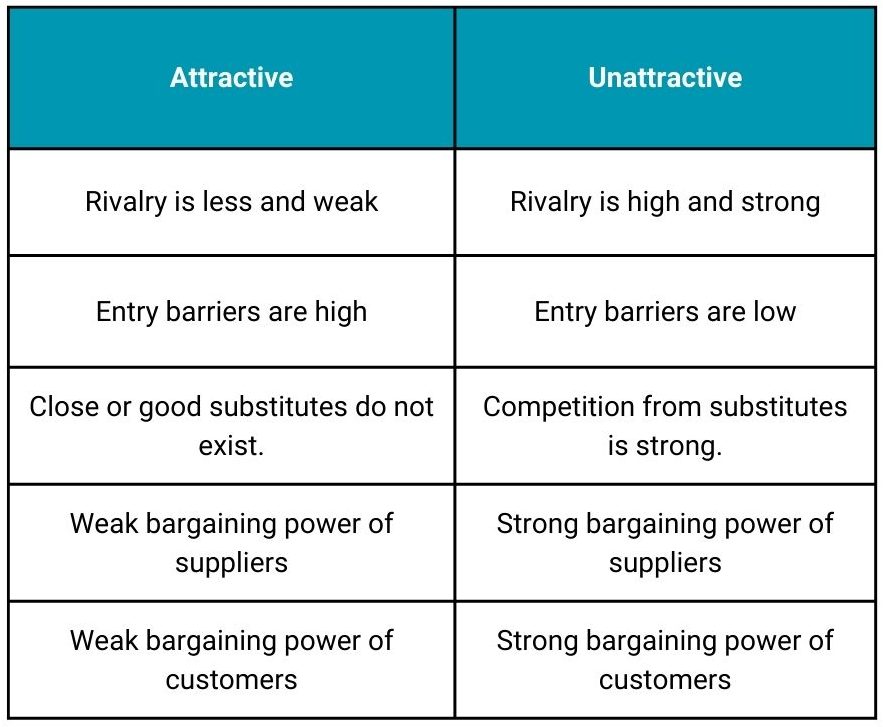
Michael Porter’s five forces is a model that identifies and analyzes five competitive forces in every industry and helps decide an industry’s strengths and weaknesses. Porter’s model can apply to any section of the economy to understand the situation within the industry. It will help to improve or enhance a company’s long-term profitability.
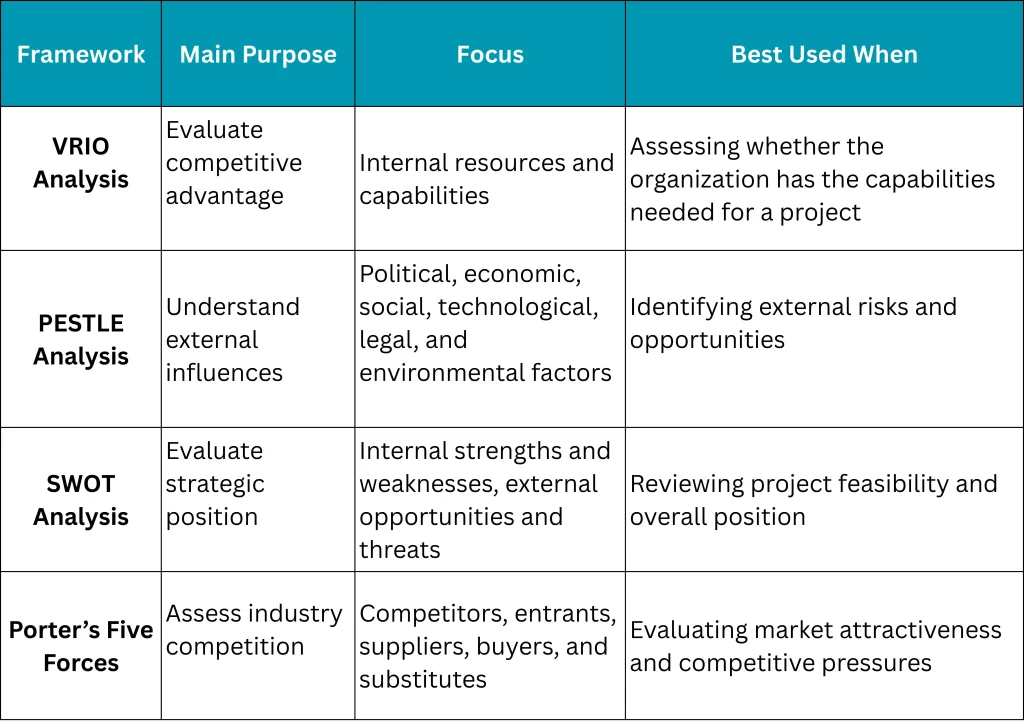
Comparison of Four Strategic Analysis Framework
All these frameworks support strategic decision-making, and they serve different purposes. Here is a comparison of VIRO analysis, PESTLE analysis, SWOT analysis, and Porter’s Five Forces.
Conclusion
The project strategic management framework includes VRIO analysis, PESTLE analysis, SWOT analysis, and Industry analysis. These frameworks help to ensure that all primary and secondary stakeholders work toward the same goal. On the other hand, it provides a systematic format that perspicuously outlines end goals, approaches for achievement, and the aspirations of end goals within a business or organization.