
Discover essential tools for a project manager to drive a successful project.
Table of Contents
Essential Tools for a Project Manager
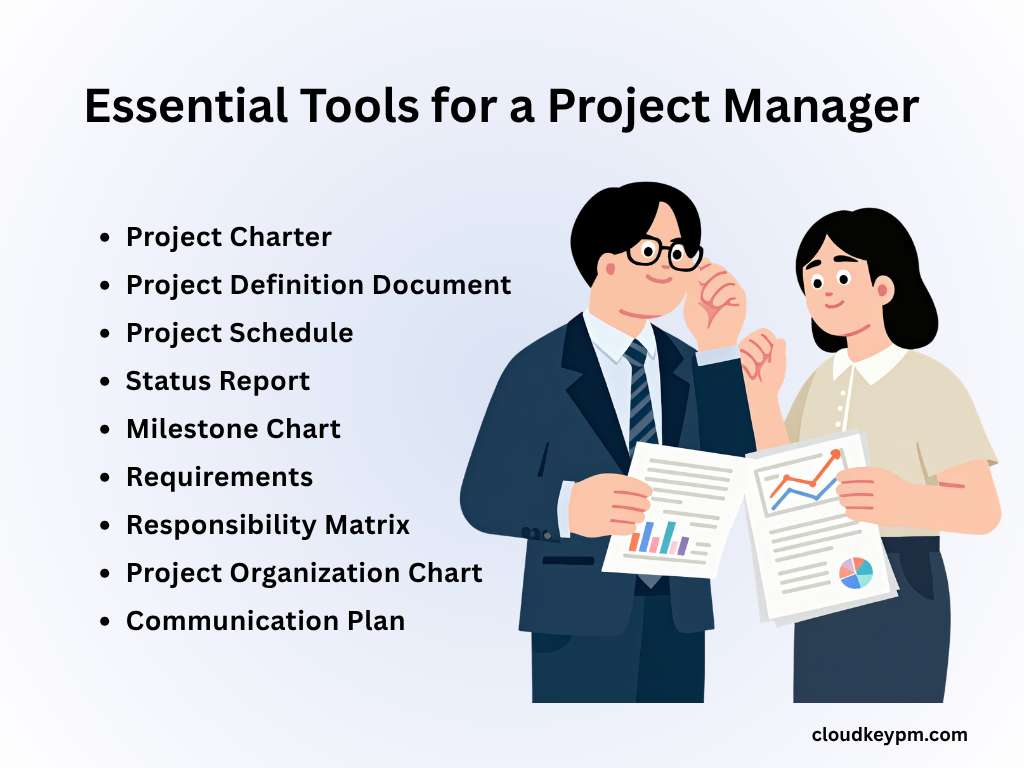
Project management is a complex discipline that requires well-organized planning, coordination, communication, and oversight. There are essential tools that any project manager must possess to manage projects effectively. So, let’s discuss each of them one by one.
Project Charter
A project charter is a formal document that officially authorizes a project and the project manager to use organizational resources to achieve the project’s objectives. It serves as the foundation of the project by clearly defining its purpose, goals, scope, stakeholders, and overall direction. This document is usually created during the project initiation phase and approved by the project sponsor or senior management before detailed planning begins.
Read More: Project Charter
Project Definition Document
A project definition document (PDD) is a key project management document that provides a detailed description of a project’s objectives, scope, deliverables, requirements, assumptions, constraints, and implementation approach. It serves as a blueprint for the project, helping stakeholders understand what the project will achieve and how it will be executed.
This document is usually created after the project has been approved and expands on the information contained in the project charter. Here are the key components of the project definition document.
- Project overview
- Project objectives
- Project scope
- Deliverables
- Requirements
- Stakeholders
- Assumptions
- Constraints
- Risks
- High-level schedule
- Budget overview
Project Schedule
A project schedule is a detailed timeline that outlines all project activities, tasks, milestones, deadlines, and resource assignments required to complete a project successfully. It serves as a roadmap for the project team, showing when work should start, how long it will take, and when it must be completed. This document helps project managers monitor progress, coordinate resources, and ensure the project is completed on time.
Read More: Importance of scheduling in project management
Status Report
A project status report is a document that periodically reviews actual performance versus expected performance. It also provides essential information to stakeholders, such as project activities, achievements, risks, issues, budget, schedule, and upcoming tasks.
This report is typically prepared on a regular schedule, such as weekly, bi-weekly, or monthly, to ensure stakeholders remain informed about the project’s progress.
Read more: Project status report template
Milestone Chart
A project milestone chart is a visual timeline that summarises the detailed project schedule and shows progress against key milestones. This also enables stakeholders to see high-level project progress on a single page. Additionally, this chart can serve as a quick overview, highlight major achievements, track the schedule, facilitate communication, and act as an early warning system.
Read more: Importance of setting project milestone
Requirements
A project requirement is a document that defines the specifications for the project’s product or output. The key benefits of this document are managing project expectations and controlling scope.
This document also serves as a clear set of project requirements, aligning stakeholders on project expectations, providing guidance for planning and execution, reducing misunderstandings and scope creep, establishing acceptance criteria for deliverables, and supporting testing and quality assurance activities.
Responsibility Matrix
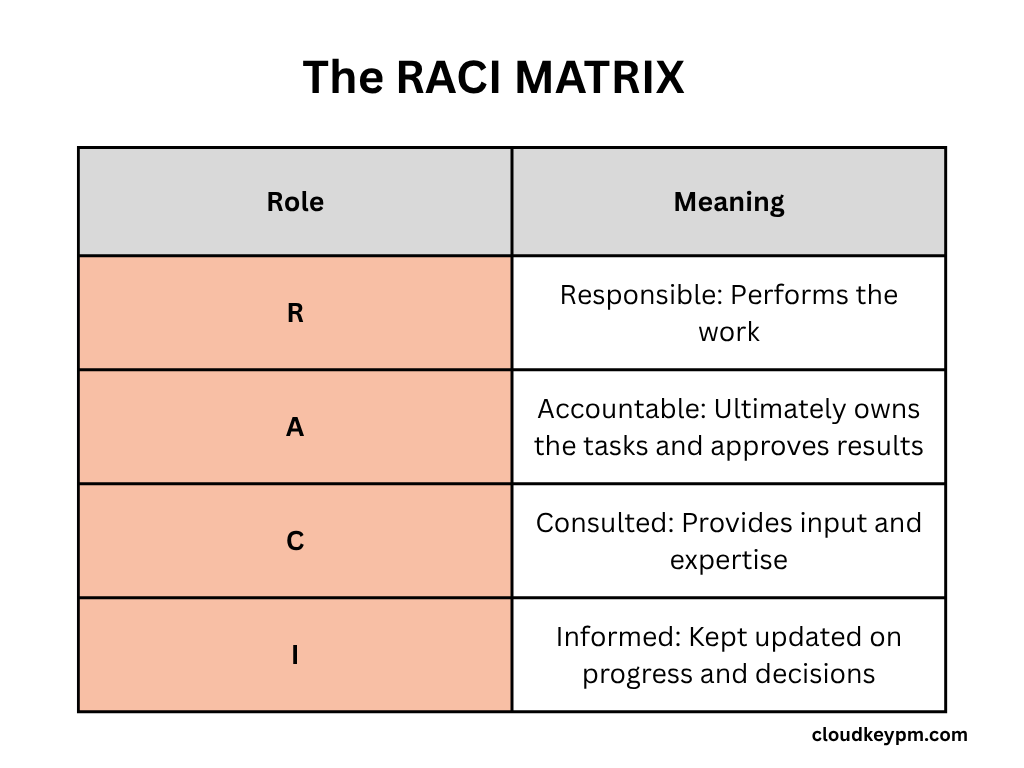
A project responsibility matrix is a project management tool that clearly defines and communicates team members’ roles and responsibilities for specific project tasks and deliverables. It helps ensure that everyone understands who is responsible for completing work, who approves it, who provides support, and who needs to be informed.
Project Organization Chart
A project organization chart is a visual diagram that shows all the project stakeholders and the working relationships among them. It also allows team members to get a better understanding of the project roles and organizational dynamics. Here are the key components of a project organization chart.
- Project sponsor
- Project manager
- Project team members
- Functional managers
- Stakeholders
Communication Plan
A project communication plan is a document that outlines how project information will be shared among managers, stakeholders, team members, sponsors, and other related parties throughout the project life cycle. It defines what information will be communicated, who will receive it, how it will be delivered, and how often communication will occur.
A well-organized communication plan helps ensure that the right information reaches the right people at the right time.
Read more: Benefits of creating a communication plan
Conclusion
A project charter, project definition document, project schedule, status report, milestone chart, requirements, responsibility matrix, project organization chart, and communication plan are the essential tools for a project manager to drive a successful project.